
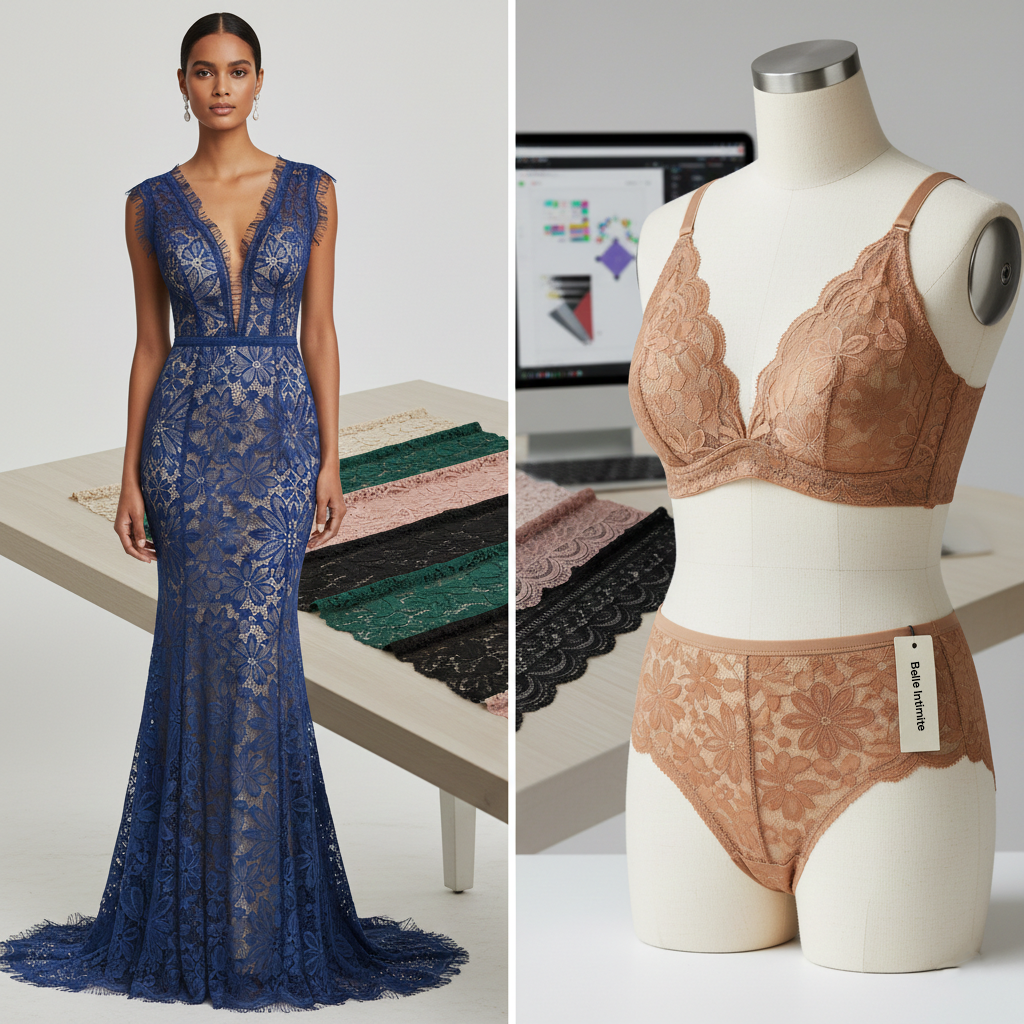
A Timeless Thread:
Lace is more than just a decorative fabric; it’s a testament to human artistry, patience, and evolving fashion. From its mysterious origins to its place in modern haute couture and everyday intimates, the story of lace is interwoven with centuries of history, culture, and innovation. As leaders in lace material wholesale, we appreciate the profound legacy behind every delicate stitch.
Join us on a journey through time to explore the fascinating history and changing styles of this exquisite textile.
Early Origins: The Birth of a Delicate Art (15th-16th Century)
While the exact birthplace of lace is debated—with Italy and Flanders often cited—the art of lace-making began to truly flourish in the late 15th and early 16th centuries. Initially, it evolved from embroidery and cutwork techniques, where threads were drawn or cut from woven fabric and the remaining threads were embellished. Early forms like “punto in aria” (stitches in the air) truly lived up to their name, as lace began to be created without a fabric ground, relying purely on needlework. This era saw lace as a symbol of immense wealth and status, adorning ecclesiastical garments and royal attire.

The Golden Age: Opulence and Intricacy (17th-18th Century)
The 17th and 18th centuries marked the “Golden Age” of lace. Driven by royal courts across Europe, especially France under Louis XIV, lace production became a major industry. Styles diversified, with needle lace (like Venetian Point and Alençon) and bobbin lace (like Valenciennes and Chantilly) developing distinct regional characteristics. Lace collars, cuffs, ruffs, and jabots became extravagant displays of power and prestige, often consuming thousands of hours of skilled labor. Governments even imposed sumptuary laws to control its use, highlighting its immense value.

Industrial Revolution: Lace for the Masses (19th Century)
The 19th century brought radical change with the advent of machine-made lace. Innovations like the Leavers lace machine could produce intricate patterns at a fraction of the time and cost of handmade lace. While initially viewed with skepticism by purists, machine lace democratized this luxurious textile, making it accessible to the burgeoning middle class. Lace found its way into everyday fashion, home decor, and became particularly prevalent in lingerie, veils, and trim for dresses, reflecting a more romantic and accessible aesthetic.
Modern Era: Versatility and Innovation (20th Century – Today)
The 20th and 21st centuries have seen lace continue to evolve, adapting to new fashion trends and technological advancements. Lace became a staple in lingerie, celebrating femininity and sensuality. Designers experimented with new fibers like nylon and spandex, creating stretch lace that offered both comfort and perfect fit—a key factor in the success of our own high-volume undergarment production. Today, lace ranges from delicate vintage-inspired patterns to bold geometric designs, appearing in everything from bridal gowns and evening wear to athletic apparel and, of course, the comfortable and beautiful bras and underwear we specialize in.


Leave a Reply